Steel Wire Ropes

Engineered for cranes, hoists and heavy industry

A wire rope is a machine with hundreds of moving parts. Every time it runs over a sheave or winds onto a drum, its wires slide, bend and share the load. Choosing the right construction, core and lay is what decides whether a rope gives long, predictable service or wears out early.

We supply steel wire ropes for EOT and gantry cranes in steel plants and power stations, port and shipyard cranes, construction tower and mobile cranes, electric hoists and winches. Each rope is selected against the equipment maker's specification and built to recognised standards such as IS 2266 and EN 12385.

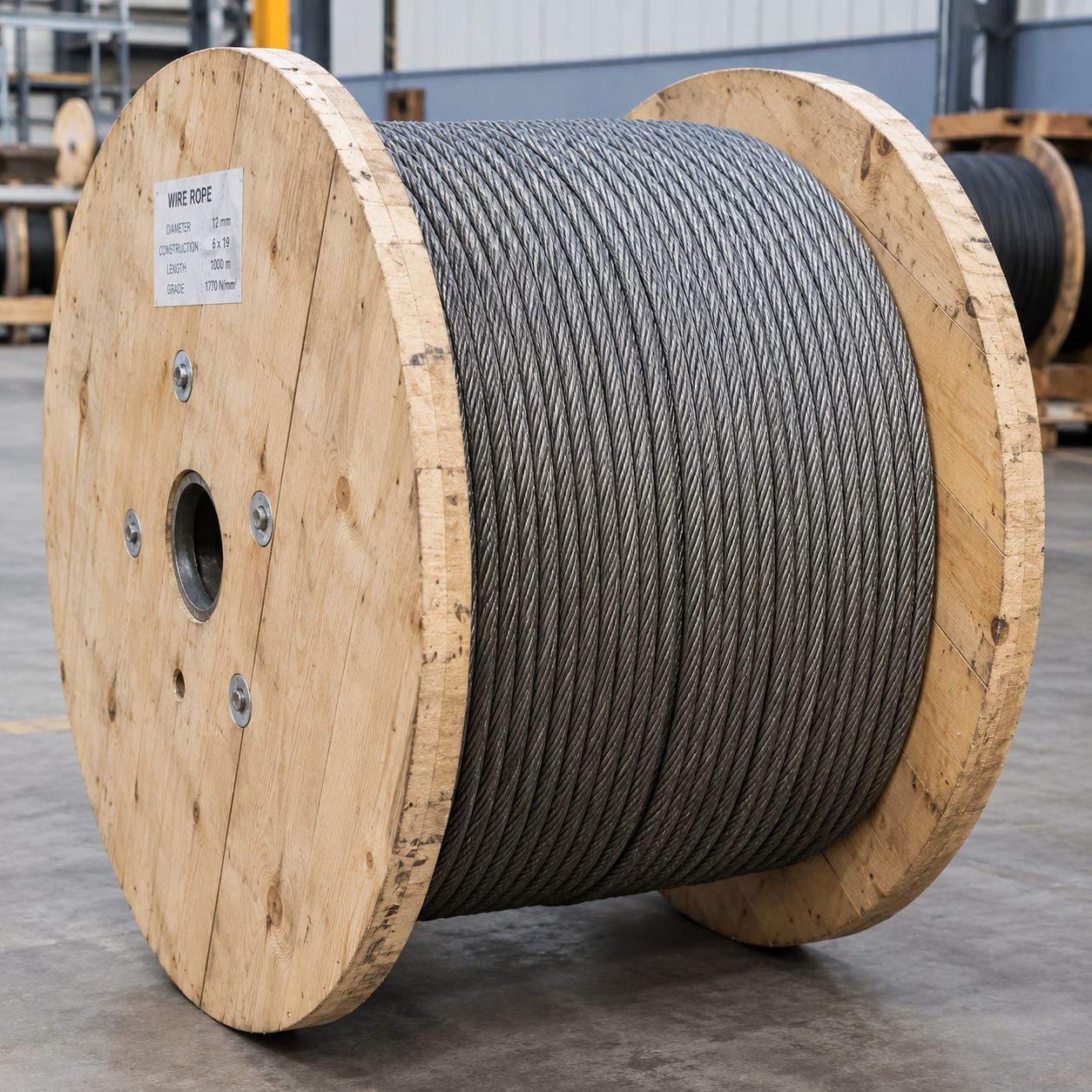
Steel wire rope on a reel

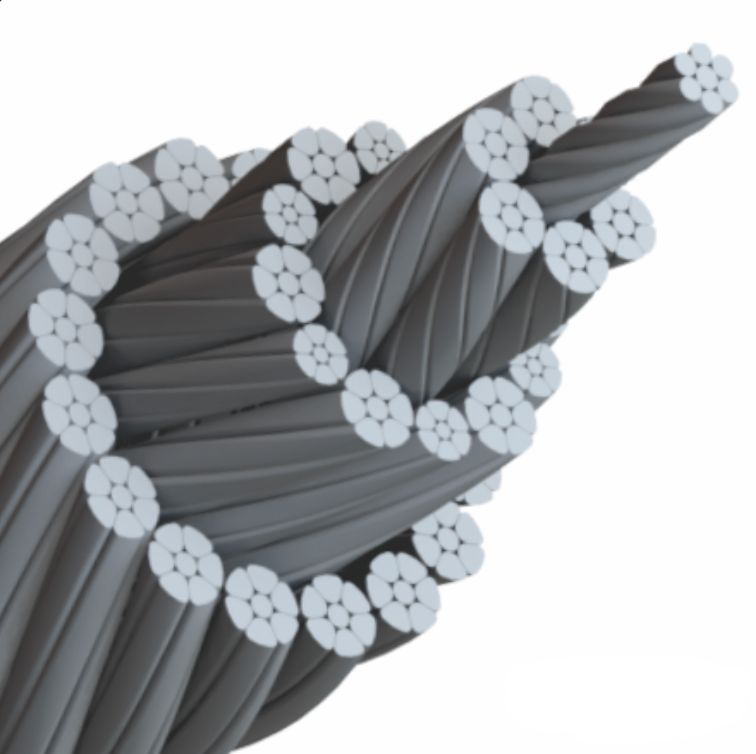
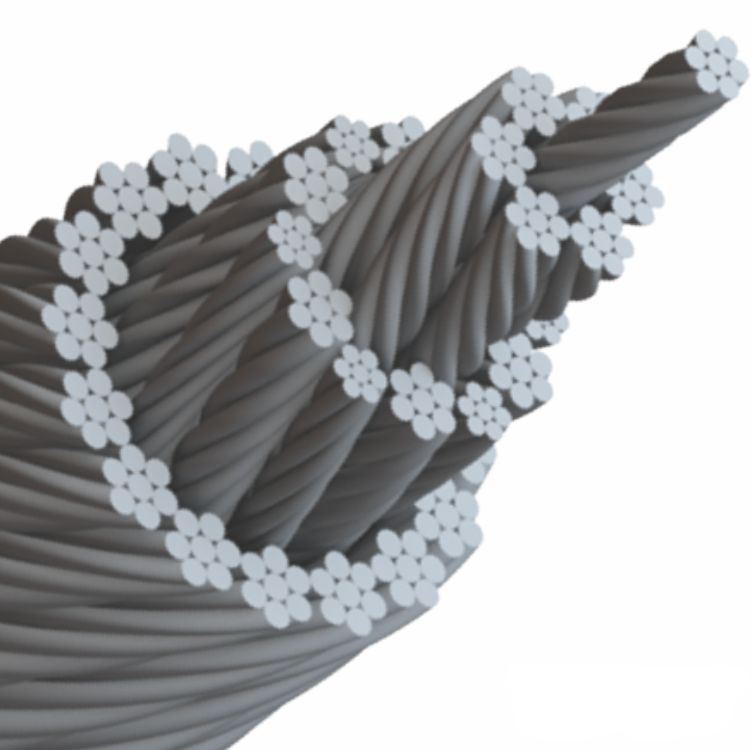
Anatomy of a wire rope

01
Wire

Cold-drawn high-carbon steel wire. Its tensile grade sets the strength of the rope.

02
Strand

Wires laid helically in layers around a centre wire. The pattern (Seale, Warrington, Warrington-Seale) sets wear and flexibility.

03
Core

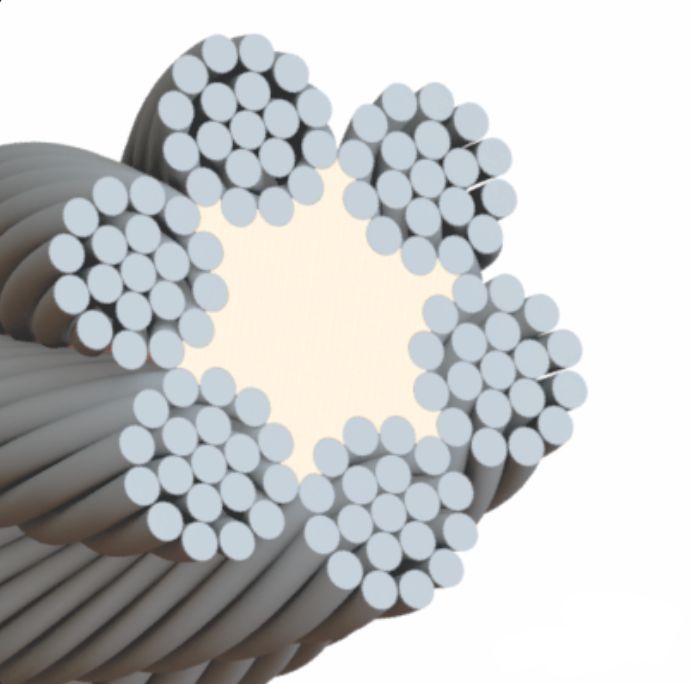
The centre that supports the strands: fibre (FC), wire rope (IWRC) or a single wire strand (WSC).

04
Rope

Strands laid around the core. The lay type and direction decide how the rope handles, wears and rotates.

How to read a rope construction

Every rope is described by a code. Tap or hover over each part to see what it means.

x
Strands

Number of outer strands in the rope.

Wires per strand

Nominal number of wires in each strand.

Strand pattern

Warrington-Seale. Other codes: S (Seale), W (Warrington), M (cross lay), K (compacted).

Wire layers

Wires in each layer, outer to centre: 14 outer, 7+7 Warrington layer, 7, 1 centre wire.

Core

Core type: FC, IWRC or WSC.

Core types

FC, IWRC or WSC?

The core supports the strands and keeps the rope round under load. It affects strength, flexibility, crush resistance and how the rope behaves on a drum.

FC
Fibre Core

A core of natural fibre (such as sisal) or synthetic fibre (such as polypropylene). It gives a flexible rope that holds lubricant well, and is lighter than a steel-cored rope of the same size.

  • +Most flexible
  • +Lighter weight
  • +Holds lubricant
  • −Lower breaking load
  • −Crushes on multi-layer drums
  • −Not for heat
Best for: General purpose ropes, slings, winches with single-layer drums.
IWRC
Independent Wire Rope Core

The core is a small wire rope in its own right, usually a 7x7. It supports the outer strands firmly, so the rope keeps its shape under load and on the drum.

  • +Higher breaking load
  • +Crush resistant
  • +Less stretch
  • +Heat tolerant
  • −Slightly less flexible
  • −Heavier than FC
Best for: EOT and gantry cranes, hoists, multi-layer drums, hot environments.
WSC
Wire Strand Core

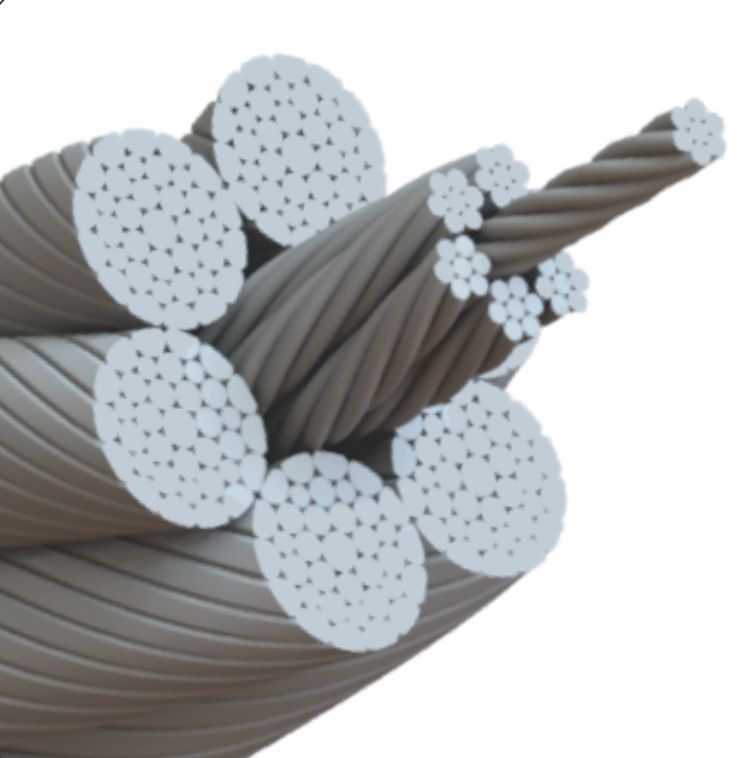
The core is a single wire strand, often the same construction as the outer strands. It is common in smaller diameters and forms the centre of multi-strand rotation-resistant ropes.

  • +High strength
  • +Minimal stretch
  • +Compact cross-section
  • −Stiffer than FC
  • −Less internal lubricant reserve
Best for: Smaller diameter ropes, rotation-resistant hoist ropes.

Diagrams are illustrative cross-sections, not to scale. marks the core.

Lay types

Regular lay or Lang's lay?

The lay describes the direction the wires turn in each strand and the direction the strands turn in the rope. In the code, the lower-case letter is the wire direction and the capital is the strand direction: sZ is right hand regular lay.

RHRL sZ

Right Hand Regular Lay

Wires laid opposite to the strands, so they appear roughly parallel to the rope axis. Stable, resists kinking and crushing, and is easy to handle.

The standard for most crane, hoist and general purpose ropes.

LHRL zS

Left Hand Regular Lay

Same properties as right hand regular lay, with the strands turning the other way.

Where the drum or reeving needs a left hand rope, or paired with RHRL on twin-rope hoists.

RHLL zZ

Right Hand Lang's Lay

Wires laid in the same direction as the strands, so more of each wire is exposed. Better resistance to abrasion and bending fatigue, but the rope tends to rotate.

Both rope ends must be fixed. Never use with a swivel on a 6- or 8-strand rope.

LHLL sS

Left Hand Lang's Lay

Lang's lay with left hand strands. Same wear benefits and the same need to restrain both ends.

Specific drum or reeving arrangements, as specified by the equipment maker.

Property Regular lay Lang's lay
Wire direction vs strand Opposite Same
Abrasion resistance Good Higher
Bending fatigue resistance Good Higher
Crushing and distortion resistance Higher Lower
Tendency to rotate under load Lower Higher
Ends One end may be free Both ends must be fixed

Alternate lay

Regular and Lang's lay strands alternate within one rope, combining some of the crush resistance of regular lay with some of the wear resistance of Lang's lay.

Lang's lay needs fixed ends

A Lang's lay rope will try to unlay itself under load. Do not use it where one end is free to rotate, and never with a swivel on a 6- or 8-strand rope.

Our range

Wire rope constructions

Open the specification sheet for diameters, weights and minimum breaking loads.

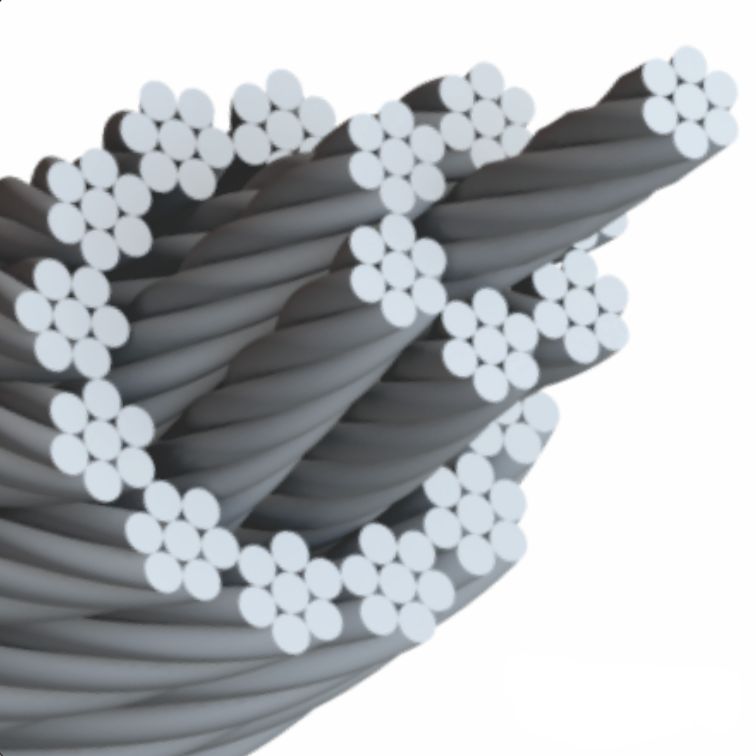
6x19M (12/6-1) FC / IWRC wire rope Six-strand

6x19M (12/6-1)

+ FC / IWRC

Six cross-lay strands of 19 wires: 12 outer over 6 inner around a centre wire. Large outer wires resist abrasion, making it a dependable, economical all-rounder.

Typical use: Winches, haulage, slings, general hoisting
View Specs (PDF)
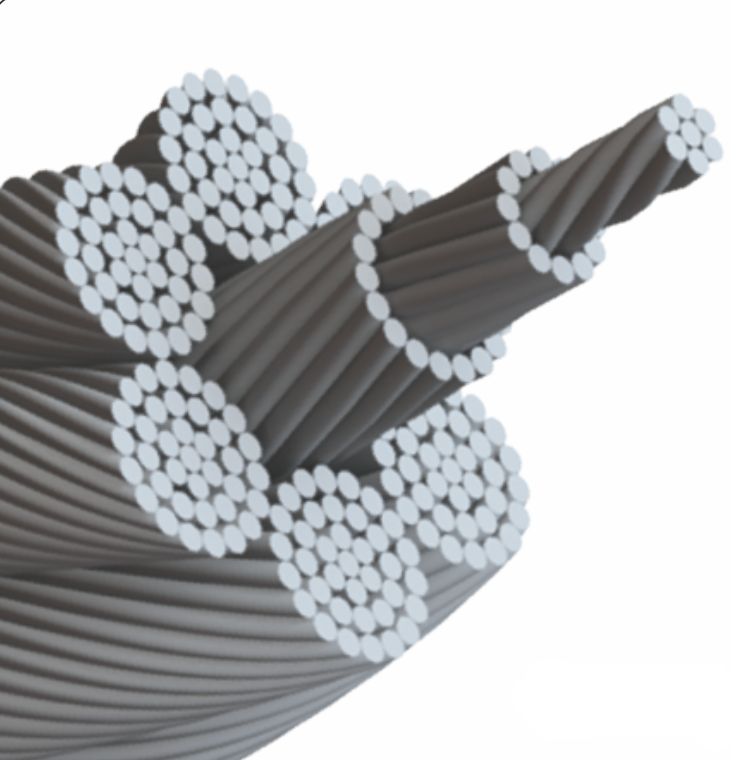
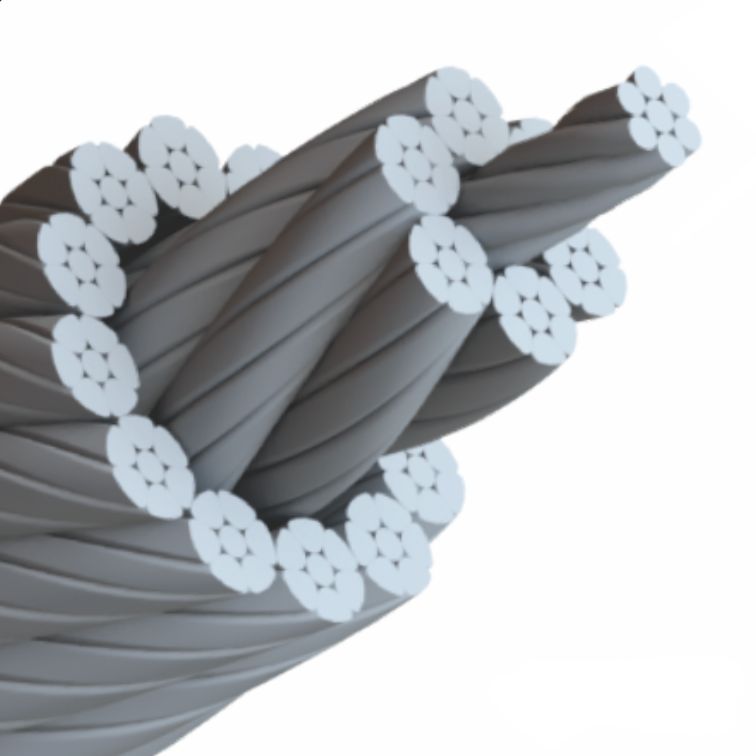
6x36WS (14-7+7-7-1) FC / IWRC wire rope Six-strand

6x36WS (14-7+7-7-1)

+ FC / IWRC

Warrington-Seale strands combine 14 outer wires for wear resistance with finer inner wires for flexibility. The standard choice for ropes working over sheaves and drums.

Typical use: EOT and gantry cranes, hoists, winches

View Specs (PDF)
6x36WS (14-7+7-7-1) K + IWRC wire rope Compacted

6x36WS (14-7+7-7-1)

+ K + IWRC

The same Warrington-Seale construction with compacted strands. A smoother surface gives a higher breaking load for the diameter, better sheave contact and better crush resistance.

Typical use: Heavy-duty EOT, port cranes, multi-layer winches

View Specs (PDF)
7x37 (18/12/6-1) WSC wire rope All-steel

7x37 (18/12/6-1)

+ WSC

Six 37-wire strands around a 37-wire core strand. Many fine wires give high flexibility over small sheaves, with the strength of an all-steel construction.

Typical use: Flexible slings, small sheaves, tight bends

View Specs (PDF)
18x7 (6-1) WSC wire rope Rotation resistant

18x7 (6-1)

+ WSC

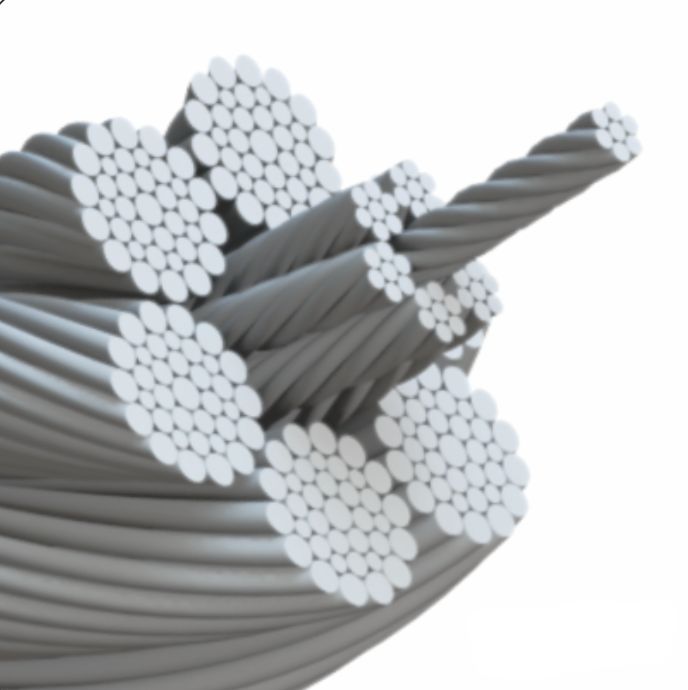
12 outer strands laid opposite to 6 inner strands around a core strand. The opposing layers resist spinning when lifting unguided loads on a single fall.

Typical use: Electric hoists, single-fall and auxiliary hoists

View Specs (PDF)
K-19x7 (6-1) WSC wire rope Rotation resistant · K

K-19x7 (6-1)

+ WSC

Compacted version of the 19x7 rotation-resistant rope. Compacted strands raise the breaking load, resist crushing and improve spooling on the drum.

Typical use: Mobile and tower crane hoists, multi-layer drums

View Specs (PDF)
K-35x7 (6-1) WSC wire rope Rotation resistant · K

K-35x7 (6-1)

+ WSC

Multi-strand rope with 16 compacted outer strands over two inner strand layers. Very high rotation resistance and breaking load, with excellent crush resistance.

Typical use: Tower and mobile crane main hoists, high lifts

View Specs (PDF)
35x7 (6-1) WSC wire rope Rotation resistant

35x7 (6-1)

+ WSC

Non-compacted multi-strand construction with three strand layers. Excellent rotation resistance and good flexibility for long single-part lifts.

Typical use: Tower cranes, mobile cranes, deck cranes

View Specs (PDF)

Rotation-resistant ropes need extra care when unreeling, cutting and installing. Read the handling guidance before fitting one.

Handling guide →

How to order a rope

Include these details in your enquiry so we can quote the right rope first time.

  1. 1 Nominal diameter and tolerance
  2. 2 Construction, class or brand
  3. 3 Finish: bright (ungalvanised) or galvanised
  4. 4 Tensile strength grade
  5. 5 Minimum breaking load required
  6. 6 Core type: FC, IWRC or WSC
  7. 7 Lay type and direction, e.g. RHRL
  8. 8 Lubrication requirement
  9. 9 Preformed or non-preformed
  10. 10 Exact length per reel or coil, and any special length tolerance
  11. 11 Packing: wooden reel, steel reel or coil
  12. 12 End fittings or terminations
  13. 13 Required delivery time

14. Special requirements, if any

Pre-stretchingPackagingIdentificationThird-party inspection

Example specification

20 mm · 6x36WS (14-7+7-7-1) + IWRC · 1960 N/mm² · Ungalvanised · RHRL · Preformed · Lubricated · 500 m on wooden reel

Send Your Requirement

Safety information

A wire rope failure can injure people and damage equipment. Always observe the following.

  • A wire rope will fail if it is worn out, shock loaded, overloaded, misused, damaged, poorly maintained or abused.
  • Inspect the rope for wear, damage or abuse before every use.
  • Never use a rope that is worn out, damaged, corroded or has been abused.
  • Never overload or shock load a wire rope.
  • Use the correct design factor for the application.
  • Read and understand the equipment manufacturer's handbook and the rope manufacturer's guidance.
  • Follow the applicable regulations, standards and codes for inspection, examination and rope discard.
See Discard Criteria

Go deeper

Full specifications for the range, and our guide to keeping ropes in safe service.

Need Expert Assistance?

Our technical team is ready to help you find the perfect solution for your requirements.